
How We Hear
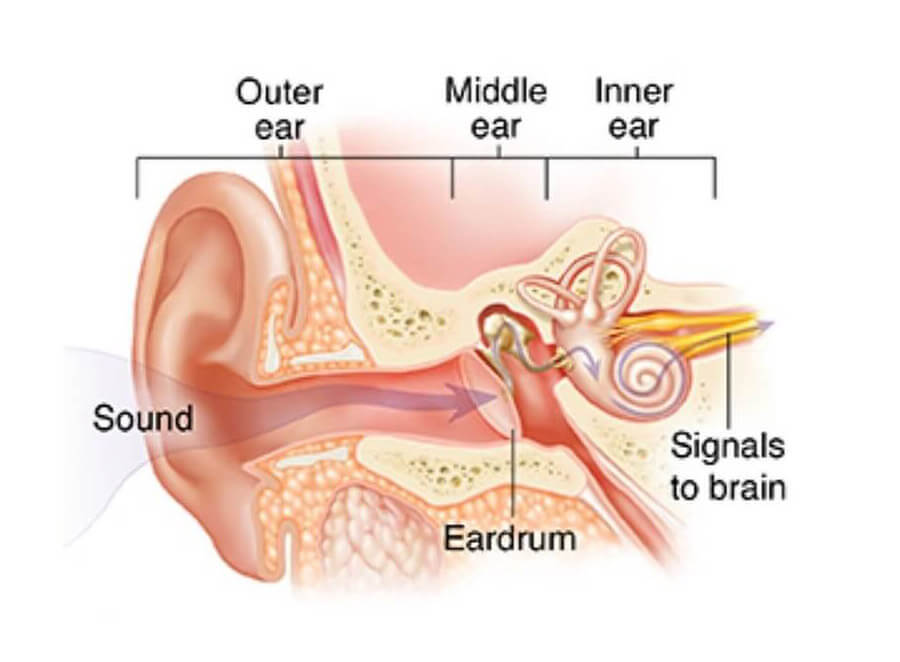
How We Hear
Parts of the ear
Our ears are made up of 3 parts:
- The outer ear comprised of the visible pinna and ear canal.
- The middle ear which includes the ear drum and middle ear cavity housing the 3 tiny bones called the ossicles.
- The inner ear or cochlea
How do our ears work?
Sound waves are captured into the ear via the ear lobe. As the sound travels into the ear canal, it vibrates the ear drum. These vibrations then travel via the ossicle bones to the cochlea. The cochlea is filled with fluid that carries the vibrations like waves to tiny hair cells which are tuned to a particular pitch. When the hair cells move in the fluid, they send a message through to the auditory nerve which is connected to the brain.
Each section of the ear must be working properly for this process to happen. Our full Diagnostic Hearing assessment assesses each of the sections of the ear so if a hearing loss is detected we can help determine the cause of the hearing loss.
Types of Hearing Loss
- Conductive Hearing loss – this occurs when the sound being transferred through the middle ear to the cochlea is reduced. It can be caused by wax in the outer ear, fluid in the middle ear, abnormality of the middle ear bones or issues with the ear drum.
Usually these hearing losses are temporary and can sometimes resolve on their own. In some cases further intervention such as surgery may be an option. Your Audiologist will advise if referral to an Ear, Nose and Throat (ENT) is warranted. - Sensorineural hearing loss – this is where the nerve fibres in the inner ear are damaged. This can be due to noise exposure, medication, trauma or age. This is the most common type of hearing loss in adults. It is permanent and can vary in degree from mild to profound. In Australia it is estimated that 1 in 3 adults over the age of 60 have a hearing loss. Of those, less than 50% have had a hearing test and wear appropriately fitted hearing aids.
- Mixed hearing loss – this is when the hearing loss is a combination of sensorineural and conductive.